
Hear Our Voices: Give Us the Foundations to Grow, Malawi Pupils Demand
Learners challenge African leaders to make education a right for every child, warning that millions of vulnerable children, including girls, learners with disabilities and poor children remain the most excluded from classrooms

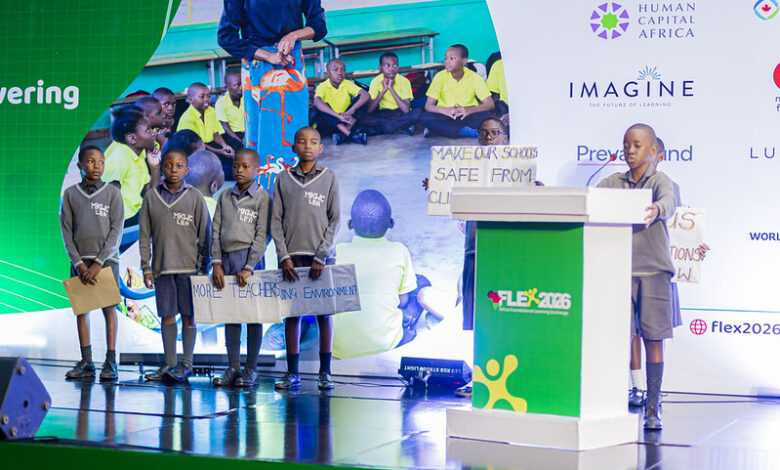
MALAWI, July 23 – The most powerful voices at the Africa Foundational Learning Exchange (FLEX2026) held last week in Lilongwe were not those of ministers, policymakers or development partners. They belonged to children – and when they spoke, they brought the continent’s education leaders to a rare moment of silence.
For three days, education ministers, policymakers, development partners and researchers from across Africa gathered to confront one of the continent’s greatest challenges: why millions of children still spend years in school but leave unable to read a simple sentence or solve basic mathematics problems.
Inside the packed Bingu wa Mutharika International Convention Centre, delegates debated financing, artificial intelligence, learning assessments and accountability. They examined data, reviewed reforms, audited the progress and negotiated fresh commitments aimed at ending learning poverty by 2035.
But when the time came for children to speak, the tone of the conference changed. The atmosphere inside the hall was transformed as five pupils from Mkwichi Primary School walked onto the stage carrying a simple but powerful message for more than 700 delegates representing over 45 African countries. Their voices brought the conversation back from policy language and statistics to the children at the centre of the debate.
“We stand before you today not just as children, but as the future of this continent,” 11-year-old Percy Kambalame, a Grade four pupil, told ministers, permanent secretaries, education experts and international development partners.
“You have gathered here to talk about us, about our schools and about our futures. We thank you for committing to end learning poverty by 2035. But a plan without our voices is like a school without books.”
Their message was impossible to ignore.
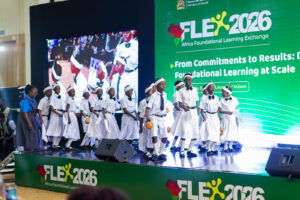 Across Africa, as many as nine in every ten children aged ten cannot read and understand a simple text or perform basic mathematics. Behind every statistic, the pupils reminded delegates, was a child whose future was being shaped long before adulthood.
Rather than simply describing their challenges, the children presented leaders with four clear demands that reflected the realities they face every day in school.
Their first plea went to the heart of the conference itself – the need to ensure every child acquires the foundational skills needed to learn and thrive.
“Give us the foundations to grow. We cannot build a house without a strong foundation,” said 11-year-old Chindikani Msiska, a Grade four learner, delivering the message on behalf of his fellow pupils.
“Yet many of us are sitting in classrooms unable to read a single sentence or solve a simple sum.”
The children urged governments to ensure every learner has access to quality reading and numeracy materials in languages they understand. They also called for teachers to receive the support needed to teach children at the appropriate level and for struggling learners to receive remedial programmes before they fall permanently behind.
For many delegates, the appeal echoed discussions that had dominated the conference that opened on July 15.
Throughout the three-day exchange, ministers repeatedly stressed that foundational learning – ensuring children master literacy and numeracy in the early grades – was the single most important investment governments can make if Africa hopes to realise its demographic dividend.
In his opening speech at the conference, Malawi’s Minister of Education, Science and Technology, Bright Msaka, stressed that Africa’s learning crisis was not a reflection of children’s abilities, but of education systems that have failed to deliver.
“This crisis is not a failure of children’s intellect. It is a gap in how systems deliver,” he said, urging governments to move beyond declarations and implement reforms with urgency.
The children’s second demand reflected another growing threat facing African education: climate change.
“When floods wash away our classrooms or extreme heat makes our minds tired, our education stops,” Jeremiah Zereza, a 10-year-old Grade four pupil, told delegates.
The children called for climate-smart schools capable of withstanding floods and storms, access to clean water and sanitation, and education systems that continue functioning even when disasters strike.
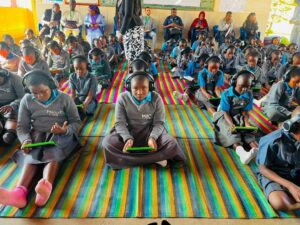
For children in countries increasingly affected by floods, droughts and extreme weather, they said, climate resilience is no longer simply an environmental issue – it is an education issue.
Their third demand exposed another inequality shaping education across the continent. While governments increasingly discuss artificial intelligence, digital learning platforms and technology-enabled teaching, children said they still attended schools without electricity, computers or internet access.
“We hear about a digital future and the power of artificial intelligence,” said 11-year-old Sitabonga Likongwe, a Grade four pupil, “but many of our schools do not even have electricity or a single computer.”
“The digital divide is becoming a learning divide,” Likongwe said.
The pupils urged governments to ensure rural and underserved schools are not left behind as Africa embraces digital education, calling for basic connectivity, digital tools and equal opportunities regardless of where children live.
Perhaps the most emotional appeal came in their final demand. Education, they reminded delegates, is a right – not a privilege. Yet girls, children living with disabilities and those from poor families remain the most likely to leave school and the least likely to return.
The children challenged governments to remove the hidden barriers that keep vulnerable learners away from classrooms by investing in inclusive infrastructure, school feeding programmes, safe transport and targeted support that ensures every child has an opportunity to learn.
“No child should be pushed out of the classroom,” appealed 11-year-old Clever Manase.
Their presentation received sustained applause, but it also posed an uncomfortable challenge to the leaders gathered in the hall. Throughout the conference, delegates had debated financing models, assessment systems, teacher coaching, and digital innovation and accountability frameworks.
Children distilled all those complex conversations into one simple appeal: “Do not just exchange ideas,” they told Africa’s leaders. “Exchange promises. Act for us; act with us to end learning poverty together.”
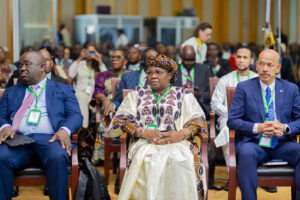
Their message carried into the negotiations that followed, as ministers, permanent secretaries and heads of delegation from 42 African countries worked towards what would become the FLEX2026 Resolution.
By the close of the Third Africa Foundational Learning Exchange, last Friday, July 16, delegates had agreed to sustain a continent-wide drive to ensure every African child can read with understanding, perform basic mathematics and develop critical reasoning skills.
Governments also pledged to increase domestic investment in foundational learning, strengthen accountability systems and scale up proven teaching approaches as part of a shared ambition to end learning poverty by 2035.
The declaration reflected a growing recognition among leaders that Africa can no longer afford to leave millions of children behind during the earliest years of education.
Rather than announcing entirely new initiatives, ministers agreed to deepen reforms already underway, focusing on six priority areas they believe will determine whether classrooms across the continent begin producing better learning outcomes.
 The first is political leadership
Governments committed to take full ownership of foundational learning reforms by embedding them within national education systems instead of relying on donor-driven projects. Development partners, in turn, pledged to strengthen government systems rather than establish parallel programmes.
Delegates also agreed that improving learning outcomes will require governments to spend differently – not simply spend more.
Several countries committed to creating dedicated budget lines for foundational learning to finance teacher training, classroom coaching, assessments, learning materials and learner welfare.
Reliable data and effective use of technology emerged as another key pillars of the declaration. Countries agreed to strengthen learning assessments and improve how information flows from classrooms to national education authorities so that policymakers can identify struggling learners earlier and make decisions based on evidence rather than assumptions.
Technology also featured prominently in the discussions. However, unlike previous education conferences where digital learning often dominated the agenda, delegates repeatedly stressed that technology should support – not replace – effective teaching.
Governments committed to embedding proven education technologies, including artificial intelligence, into existing public education systems while ensuring they complement evidence-based teaching methods rather than operate as isolated pilot projects.
The final commitments focused on improving coordination between governments and development partners and ensuring children transition smoothly into school, particularly those living in remote communities or those who remain out of school.
The emphasis throughout was on moving from isolated success stories to reforms that can reach every classroom.
For many delegates, there was already evidence that such reforms work.
Tanzania presented one of the conference’s strongest examples. Its MEWAKA teacher coaching programme increased reading proficiency among learners from 64 per cent in 2021 to 90 per cent in 2025 after investing heavily in classroom coaching and structured literacy instruction.
Nigeria reported expanding its Teaching at the Right Level programme to more than 12,000 schools, while host nation Malawi highlighted the progress of its Building Education Foundations through Innovation and Technology (BEFIT) programme, which has reached nearly 890,000 learners and trained close to 18,000 teachers.
Delegates were quick to caution, however, that scale alone should not be celebrated. The real measure of success, they said, is whether children are actually learning.
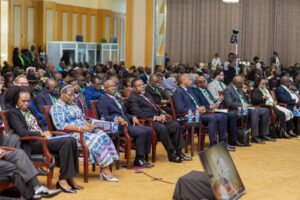 Financing dominated many of the closed-door discussions
With African governments facing mounting fiscal pressures, education leaders acknowledged that sustaining reforms would require greater domestic investment alongside continued international support.
Some countries demonstrated that commitment through national budgets. Sierra Leone now allocates 21 per cent of its national expenditure to education, while The Gambia has directed one quarter of its education budget specifically towards foundational learning.
Development partners also announced fresh financial commitments designed to support nationally led reforms.
The conference launched the Foundational Learning Initiative for Government-Led Transformation (FLIGHT), a new mechanism expected to mobilise US$35 million in philanthropic funding behind government priorities rather than fragmented donor projects.
The Global Partnership for Education announced an additional US$37 million for countries including Lesotho, Namibia, Zambia and Zimbabwe, while the World Bank reaffirmed support through its US$1.5 billion AIM4Learning programme, part of a broader US$16 billion education portfolio across Africa.
Albert Nsengiyumva, Executive Secretary of the Association for the Development of Education in Africa (ADEA), said the challenge facing governments extends beyond mobilising resources.
“Countries are going through very tough fiscal pressure, but it is not just about getting resources. It is how we use those resources that matters,” he said.
“It is how we build continuity and embed accountability into our systems so that our children can be proud of their countries.”
That message echoed another recurring theme throughout the conference – that declarations alone will not transform classrooms.
Education leaders repeatedly acknowledged that Africa has produced ambitious education strategies before. What has often been missing is sustained implementation, rigorous monitoring and political accountability.
Read more: The Missing Link in Africa’s Education Reforms
The next FLEX will take place in Abidjan, Côte d’Ivoire, where governments and partners will assess whether the commitments made in Malawi are delivering the changes children demanded for – from better learning materials, better learning environment and teacher support to more inclusive and resilient schools. Progress will be reviewed through quarterly meetings of the Africa Foundational Learning Ministerial Coalition ahead of the Abidjan convening.
