
Court Hands Citizens Power, Forcing Governors to Reveal Procurement Transactions
Ruling affirms every citizen’s right to access county contracts, budgets, and transactions without obstruction or excuses.

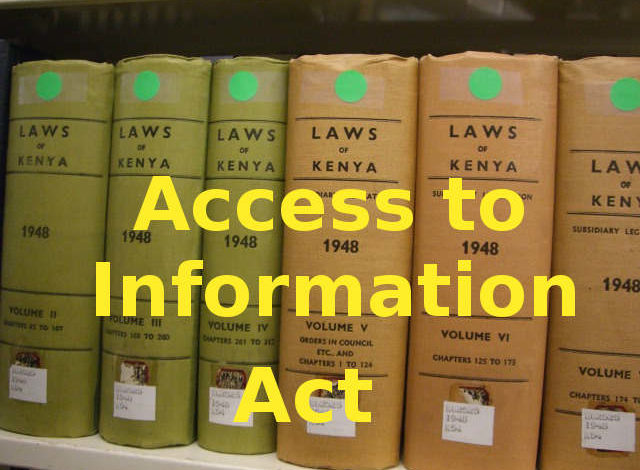
Busia County, September 23 – For decades, Kenyans have lived under a fog of secrecy when it comes to government contracts and procurements. Billions of shillings in public resources are committed in boardrooms and deal rooms, yet citizens remain locked out of the details. The Standard Gauge Railway is the clearest example. A multibillion-dollar contract with China was signed in secrecy and remains withheld to date, even after the courts ordered disclosure. That refusal was not an anomaly but the blueprint of how government officials handle major contracts, with secrecy being the norm and accountability the exception.
A more recent flashpoint was the controversial deal with India’s Adani Group, which secured a 30-year concession in Kenya’s aviation sector. Workers at Jomo Kenyatta International Airport staged strikes, citizens raised alarm over monopoly control, and the deal quickly became a political lightning rod. Under mounting public pressure and questions about transparency, the government was forced to cancel the concession.
From highway concessions to multibillion-shilling tenders in health, energy, and education, Kenyans encounter the same pattern: requests for information delayed, ignored, or rebuffed with vague excuses such as “national security,” “commercial confidentiality,” or “already available elsewhere.” The result is a culture of opacity that fuels suspicion, corruption, and mistrust.
It is against this backdrop that the High Court in Busia delivered a ruling last Friday that could change the way government conducts its business. A three-judge bench declared that the constitutional right to information is “not a favour but a duty,” striking at the heart of Kenya’s entrenched secrecy. The decision came in a petition by Busia Senator Okiya Omtatah, but its implications extend to every citizen.

The case began with a straightforward request where Senator Omtatah sought details about two county-funded projects: the construction of a trailer park and kiosks in Busia. The responses he received were evasive. The county government claimed the information was available “elsewhere,” on a “website,” or had even been “lost in a fire.” Rather than giving up, Omtatah went to court.
The judges drew a distinction between oversight powers and the right to access information. On oversight, they clarified; quoting the Supreme Court, that supervision of counties belongs to the Senate collectively, not to individual senators: “The Senate is not expected to relocate to the counties to exercise supervisory powers at that level as that would be intrusive into the functional and institutional integrity of the county government and unacceptable overreach.”
But on access to information, the ruling was explicit. The court rejected Busia County’s argument that Omtatah should only channel his request through Senate committees. Instead, the judges declared: “Whether as a Senator or as a private citizen, the Petitioner had a right to inquire into the dealings of the County Government and the Respondents had a legal obligation to supply the information requested.”
The bench went further. It dismissed the county’s excuses, noting that reasons such as information being “elsewhere,” “online,” or “destroyed” were not among those permitted under Section 6 of the Access to Information Act. By closing these loopholes, the court set a two-pronged precedent: Senate oversight remains collective, but the right to information belongs to each citizen individually.
The decision also sharpened personal accountability. The court held that Governor Paul Otuoma, as the county’s Chief Executive Officer, “was for all purposes and intent, the Access Information Officer of the County.” In effect, governors, and by extension, cabinet secretaries, parastatal heads, and university vice chancellors, cannot push responsibility down the chain. The buck stops with them.
This matters in a political culture where leaders routinely claim ignorance when scandals erupt. With this ruling, failure to disclose is not a bureaucratic lapse but a breach of constitutional duty. As the judges emphasized, Article 35 of the Constitution guarantees every citizen access to information, while Article 10 enshrines transparency and accountability as binding national values.

The significance of the ruling becomes clearer when viewed against Kenya’s wider culture of secrecy. During the COVID-19 KEMSA scandal, tender documents were withheld on grounds of “ongoing audits.” The Nairobi Expressway contract remains largely hidden under “commercial confidentiality,” released only in part after sustained pressure. In the Adani aviation concession, secrecy around the deal terms amplified public mistrust until protests forced its cancellation. Each of these episodes highlighted how secrecy corrodes public trust.
Secrecy has long been reinforced by intimidation. Journalists and activists who demand answers are often punished for simply asking. In February 2025, investigative journalist Robert Kituyi sought information from Safaricom on how many court orders for customer records it had received from police, citing public concern over abductions. The company ignored his request, forcing him to turn to the Commission on Administrative Justice (CAJ). Even after the CAJ ruled in his favour and ordered disclosure, Safaricom still refused to comply.
Instead, it sued him in Civil Appeal No. HCCA E207 of 2025. Such lawsuits, known as SLAPPs – Strategic Lawsuits Against Public Participation, are designed not to win in court but to silence or wear down requesters with legal costs and fear. The Busia ruling strengthens the shield against such tactics by affirming that seeking information is itself a constitutionally protected act.
The ruling’s reach is broad. It applies to all information “held by the State,” covering not only counties but national ministries such as Health and Transport, state corporations like Kenya Power, regulatory bodies like the Communications Authority, and universities. Any entity funded by or acting on behalf of the State is now on notice: disclosure is the rule, secrecy the exception.
Still, a ruling is only a beginning. Officials may delay, obfuscate, or gamble that citizens lack resources to fight back in court. But the legal landscape has shifted. Citizens, journalists, and civil society now have a powerful precedent to challenge refusals. It also creates momentum for reforms: stronger CAJ enforcement, penalties for non-compliance, and public education to normalize information requests.
Many Kenyans have lauded the ruling as more than a victory for one senator. They say it is a “constitutional reset.” They said it reaffirmed their right to know as not negotiable, not conditional, and not tied to political office.
