
Journalists, Activists at Risk as UN Expert Warns of Governments, Tech Giants Collusion
UN expert and rights defenders warn that U.S. policy shifts at Meta and X are intensifying online repression across East Africa, putting online freedoms at risk and exposing critics and citizens to growing surveillance, harassment, and censorship as elections loom


Nairobi, October 1 – In a high-level online dialogue on Tuesday, a United Nations expert and frontline human rights defenders raised alarm over a dangerous trend they say is reshaping the future of free expression online. They warned that the deliberate dismantling of content moderation in the West is emboldening authoritarian governments in the Global South to silence dissent with newfound impunity.
From Washington to Nairobi, Kampala to Asmara, Dar es Salaam to Djibouti, the battle for digital space has become the new frontline of democracy. At the center of this are the America-based technology companies that once promised to democratize information but are now retreating from their human rights commitments. Defenders say this retreat is not just about corporate profit margins or Silicon Valley culture wars, but about the ripple effects of U.S. domestic politics on fragile democracies, where a single post online can still mean the difference between truth-telling and jail, or even life and death.
Ms. Irene Zubaida Khan, the UN Special Rapporteur on the promotion and protection of the right to freedom of opinion and expression, said: “Freedom of expression is under enormous threat, both from authoritarian governments and from democracies that are backsliding.” She identified elections as critical flashpoints where this threat becomes most acute, noting “manipulating information pays because if you control the information, you can control the outcome.” With Tanzania heading to the polls at the end of October, Uganda in January, Djibouti in 2026, and Kenya in 2027, her warning is a dire prediction for the region’s democratic future.

For years, platforms like Meta engaged with human rights bodies, adopting a human rights policy and consulting with the UN Office of the High Commissioner for Human Rights in Geneva. Special Rapporteurs have met with them and others, she said. However, that era of tentative cooperation seems over. “Since Elon Musk took over Twitter, now X, rules have been dismantled. Similarly, Meta recently announced it was loosening its standards,” Ms. Khan said. “They are adopting a ‘no holds barred’ approach, allowing false information and hate speech to spread. They often act only when governments request removals – removing criticism of governments while leaving government-aligned disinformation untouched.”
Her warning captured the mood of unease across East Africa, where human rights defenders (HRDs) and journalists are facing what participants called a “perfect storm” of repression: hostile governments, compromised courts, and tech platforms seemingly siding with power.
The meeting, hosted by the Office of the High Commissioner for Human Rights (OHCHR) Multi-Country Office, brought together activists from Kenya, Tanzania, Uganda, Eritrea, and Djibouti. It was meant to explore how Big Tech policies are affecting free expression in the region, but it unfolded as a sobering portrait of collusion, intimidation, and silence.
Khan explained the stakes bluntly: “This bias undermines freedom of expression and gives governments’ undue influence. Much of this stems from the broader geopolitical context. These companies are headquartered in the U.S. and influenced by U.S. policy. Under the current administration, they are receiving signals and benefits that weaken their human rights commitments.”
Her words struck a chord with participants. For many, the message was clear that decisions made in Silicon Valley, and shaped by Washington politics, were amplifying repression in East Africa and beyond.

Shrinking space, reluctant states, and complicit platforms
Paul, a Kenyan human rights defender, described how technology is being turned against citizens. “Since last year’s demonstrations, police have been able to trace protesters to their homes, leading to enforced disappearances, killings, and prolonged incommunicado detention.” Safaricom, East Africa’s leading telecom, is facing allegations of aiding security agencies in tracking and monitoring its users.
He added that state agencies are using financial surveillance to suffocate civil society. “Although Kenya has data protection laws, the government itself is often the biggest violator. Agencies such as the revenue authority routinely monitor transactions, using this information to harass organisations critical of the state. Some have had their bank accounts frozen or closed as a result.”
Ms. Khan confirmed she was monitoring Kenya closely, including a landmark High Court case on Meta’s liability for disinformation. “This case could set an important precedent, not only in Kenya but across Africa, in terms of holding platforms accountable,” she said.
Yet even as the UN expert raised the alarm, access for mandate holders remains blocked. Special Rapporteurs require state permission to conduct visits, but governments in the region are increasingly denying or delaying such requests.
East Africa’s regional pattern
The pattern is already visible. When scrutiny is absent, states act with impunity. When protections fail, defenders lose ground. That same dynamic is spilling across borders into Tanzania, where digital gag laws and strict media controls are choking expression ahead of upcoming elections. Participants at the dialogue warned that laws such as the Cybercrime Act, the Media Service Act, and the Electronic and Postal Communications Act were being used to stifle activism and expression.
Under these laws, journalists must register with a state body and obtain extra approval from the Electoral Commission before covering elections, while ordinary citizens risk arrest for posting videos on TikTok or YouTube. Rights defenders said their calls for international observers and UN Special Mandate holders to assess the situation have been delayed or brushed aside, creating the same accountability vacuum already visible in Kenya.
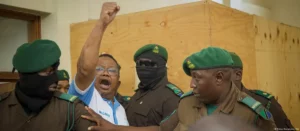
“The result is a climate of fear,” one speaker said. “Ahead of elections, even those trying to provide civic education or commentary online are being apprehended, detained, or threatened. What we are asking from the Special Rapporteur is continued documentation of these violations, but also advocacy at the international level so that what is happening on the ground does not remain hidden.”
Ms.Khan acknowledged the difficulty of engagement in Dar es Salaam. “I had requested to visit Tanzania for three years. The government said yes, then no, then yes again – eventually nothing came of it,” she told rights defenders.
From Eritrea came a chilling example of governments extending control beyond borders. “Women in the diaspora who use social media to talk about domestic violence or women’s rights are targeted,” an activist said. “The government organises campaigns against them, mobilising supporters to mass-report their accounts. Because the content is in Tigrinya, platforms don’t investigate properly. These women are simply blocked and silenced.”
A Ugandan activist described a climate of exclusion, intimidation, and fear. “Women are excluded from debates and public platforms out of fear of gender-based violence. During presidential debates, only men participate, because women are too intimidated.” As a queer woman, she said the dangers multiplied. “I am stigmatised both for being a woman and for my identity. The state targets not only me, but also my family and community. Personally, I have faced threats for years, and I fear the upcoming elections will be worse.” She asked what the UN Special Mandate holders were doing to ensure that by 2026, human rights defenders in Uganda, especially women and queer people, will be protected.
In response, Ms. Khan, the first woman to hold her mandate, affirmed that gender is central to her work. “Women’s voices are central to my reports, including the rights of lesbian and gay people. Online harassment, campaigns of silencing, and gender-based disinformation are all issues I address.”
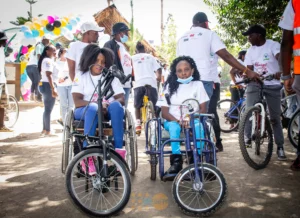
Disability rights and digital inclusion
The UN expert also highlighted the critical issue of digital access for persons with disabilities. Angela Minayo of ARTICLE 19 Eastern Africa noted, “Only Kenya has an ICT accessibility standard ensuring devices and software are usable by persons with disabilities. But accessibility goes beyond devices; it includes affordability, tax incentives, and ensuring that new technologies like AI do not leave people with disabilities behind.”
The Rapporteur welcomed the intervention, confirming that she and her regional counterparts are drafting a joint declaration on artificial intelligence and freedom of expression, emphasizing that “the online world must not create new inequalities.” She added, “For those living with disabilities, access can make an even bigger difference than for others.”
KNCHR highlights accountability gaps
While the UN Special Rapporteur raised alarms in the online dialogue, the accountability gap in Kenya was further underlined in a separate, in-person meeting on the same day. The Kenya National Commission on Human Rights (KNCHR) urged the government to allow the UN Special Rapporteur on human rights defenders to visit and assess conditions – a request that the Ministry of Foreign Affairs has yet to grant.
KNCHR highlighted that arbitrary arrests, disappearances, and killings of human rights defenders had persisted, with recent figures already outpacing the eight defenders killed, two disappeared, and 144 arbitrarily detained between 2020 and 2022.
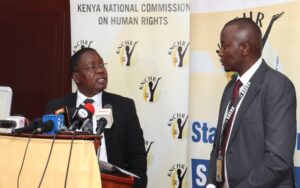
“The operating environment of human rights in the country is not good. We see how even demonstrators are handled,” said Bernard Mugesa, Chief Executive Officer of KNCHR. Amnesty International’s Executive Director Irungu Houghton added: “The next study will show these figures going down by 30 percent at least. Too many state officers are cowed by orders from above. The entire structure is paralyzed by state culture.”
For both the UN Special Rapporteur and Kenya’s rights commission, the warning is clear: governments are tightening controls while blocking scrutiny, and platforms that once supported defenders are retreating. This mirrors a broader regional trend in East Africa, where surveillance, harassment, punished online criticism, and unchecked misinformation, amplified by pliant tech platforms, are tilting the playing field ahead of elections.
