
Data and Accountability Take Centre Stage as Africa’s Education Stakeholders Meet in Malawi
Assessment data remains underused in African classrooms, with only 38 per cent of countries translating evidence into improved teaching practice since 2024.

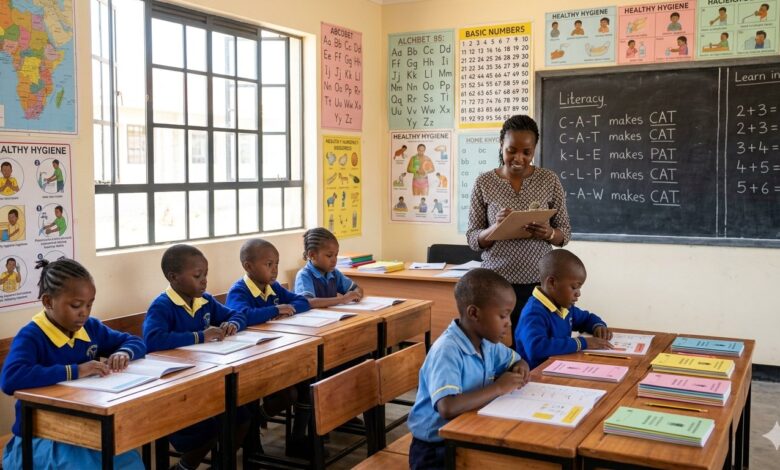
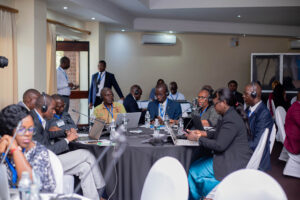
LILONGWE, July 15 – Africa’s effort to address its deepening learning crisis entered a decisive phase this week as more than 600 delegates from over 45 countries, including at least 35 education ministers, are gathering in Malawi’s capital for the third Africa Foundational Learning Exchange (FLEX 2026). The continent’s largest convening on foundational learning seeks to move beyond commitments made in recent years and accelerate progress in ensuring children acquire basic reading and numeracy skills.
The three-day high-level exchange, held at the Bingu International Convention Centre, comes amid a deepening learning crisis across the continent. Studies show that a large majority of children in many African countries cannot read and understand a simple text by the age of 10, this highlights persistent gaps in foundational learning. The challenge is compounded by declining external financing for education, constrained government budgets and growing demands for accountability, forcing countries to rethink how they finance and deliver basic education.
Ahead of today’s conference, Malawi’s Minister of Education, Science and Technology, Bright Msaka, who chairs the Africa Foundational Learning Ministerial Coalition, said in a statement that FLEX provides an opportunity for countries to share lessons, refine approaches and strengthen accountability for improving learning outcomes.
“FLEX is not a destination but a stop on the journey – a place to learn from one another, shape strategies, and hold ourselves publicly accountable,” Msaka said. “We come to this moment not just as hosts but as participants who are doing the work.”
Since its launch in Sierra Leone in 2023 and its second iteration in Rwanda in 2024, the FLEX platform has grown into the continent’s premier country-led exchange on foundational learning. This year, the gathering is anchored by a pressing question: Are commitments being turned into measurable outcomes for children?
Under the banner “From Commitments to Results: Delivering Foundational Learning at Scale,” the conference marks a turning point – from aspiration to accountability. Countries are arriving in Lilongwe armed with data, transparent self-assessments and teams ready to show what is working and where more effort is needed.
Data alone is not enough
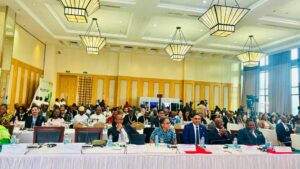
A recurring message across Wednesday’s sessions was that while African countries are collecting more education data than ever before, the real challenge is turning that evidence into decisions that improve learning – from the minister’s office to the classroom.
Sierra Leone’s Minister of Basic and Senior Secondary Education, Hon. Conrad Sackey, offered a stark assessment: “That will be our moment of truth – not of speeches, but of results.”
Rwanda’s Head of Education Sector Planning and Monitoring & Evaluation at the Ministry of Education, Adia Umulisa, emphasised that effective data systems require more than just collection – they demand integration into national planning cycles and accountability frameworks at every level of government.
Yanhong Zhang, Head of Foresight and Innovation at the UNESCO Institute for Statistics (UIS), told delegates: “We assess to learn – not simply to measure. If assessment data does not lead to better decisions, it risks becoming an exercise in measurement rather than a tool for improving learning outcomes.”
Ramya Vivekanandan, Senior Education Specialist at the Global Partnership for Education (GPE) stressed the importance of partnership in strengthening data systems, noting that “no single country or institution can solve this challenge alone. The solutions must be African-led, grounded in evidence, and supported by coordinated international cooperation.”
 Country experiences: What happens to the data generated?
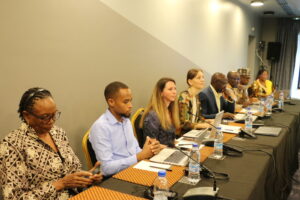
In a session examining what happens to data once it is generated, country representatives shared their approaches to turning evidence into action.
Madagascar’s Minister of National Education, Hon. Sendra Nirina Rajaonarison, emphasised that sustainable improvement depends on treating education as a connected system rather than isolated interventions – combining structured pedagogy, teacher training, community engagement, school feeding and continuous evaluation.
“Accountability is strongest when schools, communities and government institutions work towards shared learning goals supported by reliable evidence,” she said.
Ghana’s Deputy Minister of Education, Dr. Clement Abas Apaak, outlined the country’s ambitious plan to create a single source of truth for education data by integrating multiple information systems into a unified platform supported by unique learner identification. He explained that harmonising data from curriculum, assessment, school inspection and teacher licensing systems would strengthen feedback, resource allocation and decision-making at every level.
Zambia’s Principal Education Officer, Ministry of Education, Mervis Makayi, argued that data only becomes meaningful when institutions are held accountable for acting on it. The country is embedding accountability measures into performance contracts and developing dashboards that allow officials at every level to access assessment results and make timely decisions.
Kenya’s Head of the Directorate of Primary Education, Stephen Barongo, explained how the country has analysed more than 11 million learner records as part of its transition from an examination-centred system to a Competency-Based Assessment framework. Through a Learning Management System developed by the Kenya National Examinations Council, teachers across the country can access assessment principles, sample papers and training materials remotely.
Uganda’s Principal Education Officer, Musoke Abbey Bbosa, said the country is reviewing its assessment system to ensure data supports continuous learning rather than simply measuring performance at the end of the school cycle – integrating assessment data into education management systems and investing in teacher capacity so that classroom evidence informs teaching, local government planning and national policy.
Rwanda’s performance contracting model
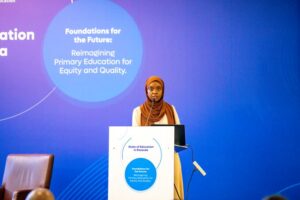
One of the most closely watched country presentations focused on Rwanda’s approach, which has embedded foundational learning indicators into district performance contracts – a system that creates direct accountability from the classroom to the highest levels of government.
Rwanda offered a practical example of what data-driven accountability looks like in practice. Through its Comprehensive Assessment Management Information System (CAMIS), education authorities track learner performance in real time, monitor teacher preparedness and identify schools needing additional support. Assessment results are also tied to district performance contracts, allowing education officials to intervene early when learners begin to fall behind.
That data is translated directly into action. Learners scoring below 50 per cent are automatically identified through the system and enrolled in a government-funded month-long remedial programme during school holidays, she said. Teachers provide targeted instruction in smaller classes, while school feeding helps sustain participation. The programme has recorded attendance of more than 90 per cent and has contributed to a sharp decline in repetition rates. To strengthen classroom delivery, more than 90 per cent of teachers handling foundational learning have also received specialised pedagogical training.
 Making assessment data count for children’s learning
During a session on forging the path from policies to classrooms, Dr. Jennifer Opare-Kumi, Senior Policy and Research Lead at the What Works Hub for Global Education (WWHGE), cautioned that “data alone does not benefit children – children benefit from the actions taken because of the data.”
Linda Jönsson, Education Specialist for Foundational Learning and Assessment at UNICEF, presented findings showing that while more countries are conducting large-scale assessments in reading and mathematics, only 38 per cent of African countries use assessment data to improve classroom practice – a figure unchanged since 2024. Overall progress on foundational learning across Africa remains modest, with only about one in ten countries demonstrating substantial gains.
The conference will be officially opened on 16 July by Malawi’s President, Dr. Lazarus McCarthy Chakwera. The three-day exchange will conclude on Friday with a field visit to a school to observe how classroom-level interventions are being implemented, followed by the adoption of the FLEX 2026 resolutions outlining key commitments and actions. The gathering is being hosted by Malawi’s Ministry of Education, Science and Technology, in partnership with the Association for the Development of Education in Africa (ADEA), and supported by partners including the Gates Foundation, Hempel Foundation, Prevail Fund, UNICEF, the World Bank and the African Union.
