
Cracks Widen in Ruto’s ODM-UDA Marriage as Broad-Based Gamble Heads for a Painful Divorce
What began as a political lifeline is slowly becoming Ruto's biggest liability, fuelling rebellion within an already weakened ODM, deepening divisions, putting his remaining Mt Kenya support under pressure and opening space for Sifuna’s emerging political movement ahead of 2027.

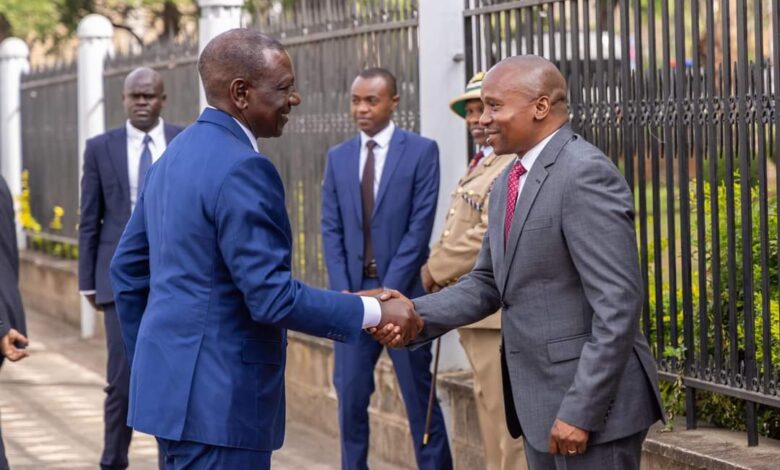
NAIROBI, July 27 – President William Ruto’s broad-based government was born out of political crisis. After the 2024 youth-led protests exposed deep public anger and rattled his administration, Ruto reached across the political divide, bringing former rivals into government to restore stability, rebuild trust and secure ODM’s formidable national machinery ahead of the 2027 election.
But the political rescue package is now turning into a political liability. Less than 13 months to the General Election, the coalition that was meant to strengthen Ruto’s re-election bid is being consumed by internal rebellion, competing ambitions and shifting loyalties – threatening to unravel the very alliance built to protect his presidency.
The broad-based arrangement is now being pulled apart by three forces: Ruto’s weakened grip on Mt Kenya, a power struggle over ODM’s future after Raila Odinga demise, and the unexpected rise of Sifuna as the face of a new generation challenging Kenya’s traditional political establishment.
The growing strain was laid bare over the weekend when Deputy President Kithure Kindiki made an extraordinary appeal to former President Uhuru Kenyatta – the same leader President Ruto spent years politically opposing – to help rebuild support for the government in Mt Kenya.
Speaking in Meru, Kindiki asked former Governor Kiraitu Murungi to reach out to Uhuru and seek his intervention.
“Vilevile, wacha nikutume mzee Kiraitu. Kwa sababu unajua, mzee Kiraitu hakuna mtu mwingine ako na CV ambayo uko nayo. Enda utafute Rais mstaafu Uhuru Kenyatta. Ni kiongozi wetu, sisi tulimuunga mkono mia kwa mia.”
The political symbolism was striking. A deputy president appointed after the dramatic fallout between Ruto and former Deputy President Rigathi Gachagua was now seeking help from the same political establishment whose influence the Kenya Kwanza administration had spent years attempting to diminish.
But Kindiki’s appeal also came at a moment when another fault line was opening inside the broad-based government: growing demands from ODM leaders for a bigger stake in the coalition and a clearer role in determining its future.
The push for former Kakamega Governor Wycliffe Oparanya reflects a broader battle within ODM – not only over the deputy presidency, but also over control of Western Kenya’s political base as the party seeks to blunt Sifuna’s rising influence in the region. Oparanya’s positioning, alongside other senior ODM figures, is part of a wider effort to strengthen ODM’s leverage within the broad-based arrangement and reinforce its demand that support for Ruto’s 2027 re-election should be matched with the deputy presidency.
Kindiki’s remarks betrayed growing unease within Kenya Kwanza. Speaking in a noticeably defensive tone, he sought to reassure Mt Kenya that it could not relinquish ownership of a government it had helped build, even as ODM’s growing demands threatened to redefine the coalition’s balance of power.
“Najua tumeongezeka; akina Oparanya wamekuja, wamekaribishwa. Lakini hatutoki, hatuwezi kuondoka. Tutang’ang’ania hapa kwa sababu hii ni serikali yetu. Ni kama mtu anajenga nyumba, anaipamba kwa plasta, anaweka sofa set na televisheni, halafu badala ya kufurahia anachokimiliki anaiacha na kwenda kuishi msituni. Mimi siwezi kufanya kitu kama hicho.”
Kindiki’s “nyumba” metaphor laid bare the coalition’s widening fault lines. To Ruto’s allies, ODM joined a government that UDA had already built and therefore could not dictate its future. To sections of ODM, however, their support has transformed them from junior partners into co-owners of the project, entitling them to greater influence – including the deputy presidency – and a decisive voice in shaping the coalition’s direction ahead of 2027.
The result is a delicate balancing act for Ruto: he must rebuild support in a region where his influence has weakened while managing a partner increasingly demanding a greater share of power.
Kindiki’s appeal to Uhuru reflected growing anxiety within Ruto’s camp over the state of his support in Mt Kenya – the region that delivered him nearly four million votes in the 2022 election.
The warning sign came in the Ol Kalou parliamentary by-election earlier this month, where the ruling UDA candidate suffered a humiliating defeat, securing only 5,450 votes against the winner’s 35,440. The result intensified questions over whether Ruto can still rely on Mt Kenya as a political anchor and whether Kindiki remains his strongest link to the region ahead of 2027.
With Gachagua consolidating support through his Democracy for Citizens Party and Uhuru retaining influence among sections of the electorate, the political foundation that propelled Ruto to State House is showing signs of erosion.
The Uhuru Paradox
The irony has continued to deepen. Politicians from both UDA and ODM have repeatedly accused Uhuru of being behind the growing rebellion within ODM – allegations that have become a recurring theme in the coalition’s political messaging.
Allies of the broad-based government have claimed that Sifuna’s Linda Mwananchi movement is being supported by the retired president as part of an effort to destabilise ODM.
National Assembly Minority Leader Junet Mohamed and Energy Cabinet Secretary Opiyo Wandayi have accused the Sifuna-led faction of being used to divide the party. Kakamega Deputy Governor Ayub Savula has gone further, claiming there was evidence that Uhuru financed activities aimed at weakening ODM.
UDA politicians have also continued blaming Uhuru for political movements they view as hostile to Ruto’s administration.
Sifuna has rejected the claims, insisting his movement is driven by ordinary Kenyans rather than political financiers.
But the contradiction surrounding Uhuru is difficult to ignore: the same retired president accused of destabilising ODM is the person Ruto’s deputy president is now seeking to help rescue the government’s fortunes in Mt Kenya.
Uhuru has become a convenient explanation for many of the challenges facing the ruling coalition – from declining support in Mt Kenya and internal tensions within ODM to criticism over the performance of the Kenya Kwanza administration.
Yet beyond the blame game is a deeper political contest: who controls Odinga’s political inheritance and who gets to shape the future of ODM.
 The Battle for ODM’s Soul
Since the formation of the broad-based government following the Gen Z uprising in June 2024, President Ruto has intensified efforts to expand his influence in regions that have traditionally anchored ODM, particularly Luo Nyanza and Western Kenya.
The strategy has been viewed by critics as an attempt to weaken ODM’s independent political identity and absorb its nationwide network ahead of the 2027 election.
Ruto has made repeated visits to opposition strongholds, accompanied by announcements of major development projects aimed at demonstrating that his administration can deliver beyond traditional political alliances.
In Western Kenya, the government has pledged billions of shillings towards infrastructure, agriculture and the blue economy while advancing major connectivity projects, including the Naivasha-Kisumu-Malaba Standard Gauge Railway extension and the Rironi–Mau Summit highway upgrade, which is expected to improve links between Nairobi, the Rift Valley and Western Kenya.
In Nyanza, the government has highlighted projects such as the Lake Victoria Water and Sanitation programme, the Kabonyo-Kanyagwal Aquaculture Centre and other blue economy initiatives as part of efforts to expand its economic footprint in a region long associated with opposition politics.
Supporters of the president argue that the outreach represents a genuine commitment to inclusive development. Critics, however, see a political strategy aimed at compensating for losses in Mt Kenya by making inroads into Odinga’s traditional strongholds.
The result is an increasingly divided ODM – caught between those who see cooperation with Ruto as a pragmatic route to influence and those who view the arrangement as an attempt to weaken the party from within.
The pro-government faction, led by Raila’s elder brother Dr Oburu Oginga and ODM chairperson Gladys Wanga, the Homa Bay Governor, alongside Cabinet Secretaries John Mbadi, Opiyo Wandayi, Hassan Joho and Wycliffe Oparanya, argues that working with the government gives ODM leverage to secure resources, influence policy and deliver tangible benefits for its supporters.
But critics accuse them of abandoning ODM’s historic opposition role and by extension Odinga’s legacy. Siaya Governor James Orengo has been among the most vocal, accusing some party leaders of “selling ODM to Ruto.”
The internal battle is increasingly reflected in public opinion. A TIFA survey conducted in May 2026 showed declining support for the broad-based arrangement, dropping from 44 per cent in November 2025 to 30 per cent.
In Nyanza, ODM’s traditional stronghold, support for the arrangement fell from 59 per cent to 49 per cent. Among ODM supporters, 74 per cent reportedly backed Sifuna’s Linda Mwananchi movement compared with 20 per cent supporting the pro-government faction.
The numbers point to a widening gap between ODM’s official leadership and sections of its traditional support base.
A New Battle for Deputy President
The tensions within the coalition have now spilled into the question of succession and who should occupy the deputy presidency if Ruto secures another term. A section of ODM leaders has openly argued that supporting Ruto’s 2027 re-election should come with a political reward: the deputy presidency.
Speaking in Malava, Kakamega County over the weekend, ODM leaders argued that if UDA provides the presidential candidate, ODM should provide the running mate.
“Sisi kama ODM tumekubali ya kwamba Rais William Ruto ndio presidential candidate wetu 2027. Lakini sisi watu wa ODM nasi tumesema ya kwamba deputy president atoke chama cha ODM.”
Junet Mohamed went further, naming Oparanya as ODM’s preferred choice. “UDA walete rais na ODM walete deputy president, na sisi tutaleta Wycliffe Oparanya.”
The push for Oparanya is not only about regional balance. It is also a response to Sifuna’s growing influence and the uncertainty he has created within the coalition.
Sifuna’s weekend rallies in Trans Nzoia and Bungoma have reinforced the perception that a new political current is emerging outside traditional party structures built around elite negotiations and ethnic alliances.

The Sifuna Disruption
Sifuna’s rise is becoming one of the consequential disruptions in Kenya’s political calculations. His removal as ODM secretary-general and subsequent ouster as Senate Deputy Minority Whip were expected to weaken his influence. Instead, the moves have propelled him into a broader national conversation, elevating him beyond ODM’s internal battles and turning him into a prominent voice in Kenya’s emerging political realignment.
Through his Linda Mwananchi movement, Sifuna has tapped into frustration among younger voters facing economic hardship, unemployment and disillusionment with a political system they believe is dominated by elite bargains.
A TIFA survey placed Sifuna ahead of several veteran opposition figures, ranking him at 15 per cent in popularity – ahead of Wiper leader Kalonzo Musyoka and close behind former Interior Cabinet Secretary Fred Matiang’i.
But Sifuna’s significance goes beyond polling numbers. His appeal is also being interpreted in what he represents: a challenge to a political culture where power has traditionally been negotiated among established figures.
His message around accountability, social justice and resistance to political patronage resonates with a generation that has grown increasingly sceptical of political deals made without public participation.
That explains why his rise has unsettled both sides of the broad-based arrangement. For Ruto, Sifuna represents a potential rallying point for anti-government sentiment. For ODM’s old guard, he represents a challenge to established structures and succession plans.
As 2027 approaches, the biggest threat facing Ruto’s coalition may not come from outside. It may come from the cracks forming inside the house built to protect him. It may come from the collapse of the very alliance designed to secure his political future.
