
The Missing Link in Africa’s Education Reforms
Africa knows how to fix its learning crisis. The real problem is getting reforms into classrooms

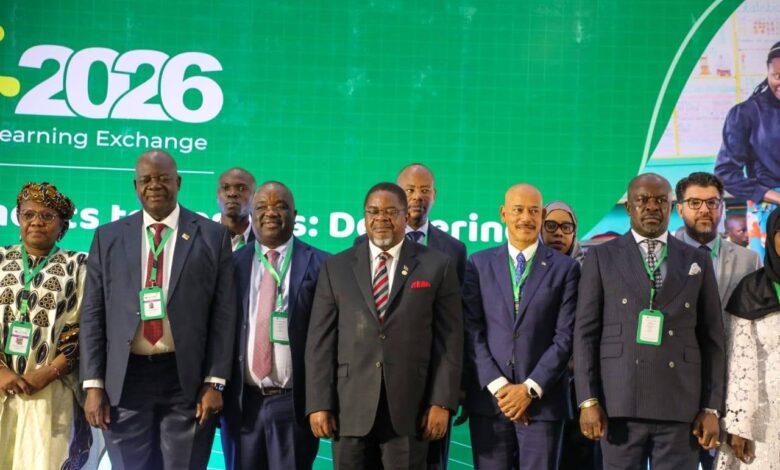
LILONGWE, Malawi, July 16 – Africa has no shortage of education policies, reform blueprints or political commitments aimed at ensuring every child acquires basic literacy and numeracy by the age of 10. What the continent continues to struggle with is translating those commitments into measurable improvements in classrooms.
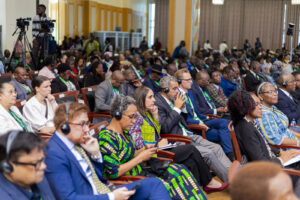
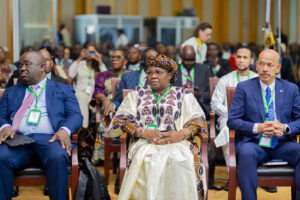
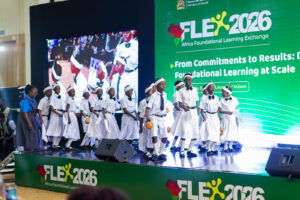
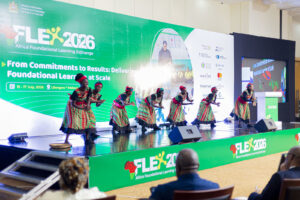
That was the central message emerging on the second day of the third Africa Foundational Learning Exchange (FLEX 2026), where more than 700 delegates, policymakers, researchers and development partners from over 45 countries – including more than 35 education ministers – gathered in Lilongwe, Malawi, this week to assess whether Africa’s education reforms are translating into better learning outcomes for children.
The conference brought together governments, development agencies, researchers and education practitioners to review progress made since African leaders adopted five foundational learning commitments at the 2024 FLEX Summit in Kigali. While delegates agreed that significant progress had been made in strengthening policies, expanding assessments and promoting evidence-based teaching, a continent-wide stocktake revealed that implementation remains Africa’s weakest link.
Presenting the findings, Shem Okare Bodo, Senior Programmes Officer at the Association for the Development of Education in Africa (ADEA), delivered a stark assessment of the continent’s progress since African governments adopted five foundational learning commitments at the FLEX2024 summit in Kigali.
“Policy strong, delivery needs improvement.”
According to Bodo, that diagnosis applies across all five commitments, which highlights a persistent gap between governments’ policy ambitions and what is ultimately happening in classrooms. More worrying still, he cautioned, is that the gap shows little sign of narrowing despite growing political attention to foundational learning.
The continental status audit found that only 25 percent of African countries are scaling evidence-based foundational learning programmes nationally. Put differently, three out of every four countries have adopted policies aimed at improving foundational learning but have yet to establish the systems, financing and implementation capacity needed to deliver those commitments at national scale.
That implementation deficit extends beyond classrooms and is increasingly reflected in political leadership itself. Although 37 countries have participated in meetings of the Africa Foundational Learning Ministerial Coalition (AFLMC) since the Kigali summit, the level of ministerial engagement has steadily declined. Attendance by education ministers has fallen from nine countries during the coalition’s inaugural meeting to just four by its tenth meeting, while 14 countries have been represented only by technical focal points, with no political leadership present.
“The same pattern as FLEX2024,” Bodo observed. “Existing frameworks – but only 25 percent of countries scale evidence-based programmes nationally.”
His assessment is particularly striking because it comes at a time when Africa has already put in place many of the policy instruments considered essential for improving foundational learning. These include the Continental Education Strategy for Africa (CESA 2026–2035), the Continental Assessment Framework for Africa (CAF-Africa) and a growing number of national policies promoting mother-tongue-based bilingual education. The challenge, Bodo argued, is therefore no longer designing reforms or securing political commitments, but ensuring those commitments are translated into sustained action and measurable improvements in children’s learning.
The challenge, delegates heard repeatedly throughout the conference, is no longer designing reforms. It is implementing them consistently in schools.
Kenya and Rwanda show what implementation looks like
Against that sobering backdrop, Kenya and Rwanda emerged among the conference’s strongest examples of how education reforms can move beyond policy commitments into measurable classroom results. While the two countries have pursued different strategies, delegates repeatedly pointed to both as demonstrating what sustained political commitment, evidence-based policymaking and continuous investment can achieve when reforms are implemented at scale rather than through isolated pilot projects.
Throughout FLEX 2026, Kenya’s education reforms were repeatedly highlighted as demonstrating what sustained political commitment, evidence-based policymaking and continuous investment can achieve when reforms are implemented at scale rather than through isolated pilot projects.
While responding to questions during a ministerial dialogue on how countries are using assessment data to identify learners most at risk of being left behind, Kenya’s Principal Secretary for Basic Education, John Lekakeny Ololtuaa, said the country’s reforms have been anchored on one central principle: using evidence to guide policy decisions rather than allowing assessment reports to gather dust.
“We have learned that assessment data is most valuable because it helps identify learners who are lagging behind in achieving expected learning outcomes,” Ololtuaa told delegates. “It also helps to inform the guidance and interventions we put in place.”
He said Kenya’s approach has shifted the role of national assessments from simply measuring performance to informing policy, planning, resource allocation and classroom support.
“Assessment data should not end in reports,” he said. “It should drive decisions, resource allocation, teacher support and classroom action. I think this applies not only to Kenya, but to all our countries.”
Rwanda offered another illustration of how evidence is shaping education policy, this time through early childhood education. Faced with evidence showing large numbers of children repeating Grades 1 and 2, the government made a deliberate policy decision to expand access to compulsory early childhood development (ECD) and pre-primary education, recognising that better school readiness was critical to improving learning outcomes in later years.
Speaking during the ministerial panel at the opening of FLEX2026, Rwanda’s Minister of Education, Joseph Nsengimana, said the country had set out to raise pre-primary enrolment from a baseline of 35 percent to 65 percent by 2029. Enrolment has already increased to 50.3 percent, reflecting what delegates described as a deliberate shift towards addressing learning challenges before children enter primary school rather than after they begin falling behind.
Among Kenya’s most celebrated achievements was Tusome, the national literacy programme that has become one of Africa’s most rigorously evaluated education reforms.
According to the continental progress review, Tusome achieved an effect size of 1.04 standard deviations in English among Grade 1 and 2 learners – the strongest rigorously evaluated learning gain reported for any large-scale foundational learning programme on the continent. Put simply, children participating in the programme gained learning equivalent to more than an additional year of schooling, while the proportion reading English fluently more than doubled from 12 percent to 27 percent.
Kenya’s influence, however, extends beyond literacy programmes. The Kenya National Examinations Council (KNEC) now plays a leading role in the Africa Foundational Learning Assessment Initiative (AFLAI), helping countries develop common literacy and numeracy benchmarks across the continent.
Kenya is also among the first countries, alongside Zambia, piloting the FLEX Indicators Framework, a continent-wide accountability mechanism designed to help governments measure whether education reforms are translating into improved classroom learning.
Yet even Kenya’s experience illustrates that reform is an ongoing process. The progress review noted that the country’s foundational learning financing indicators remain unavailable, while ensuring that classroom materials remain fully aligned with evolving learning benchmarks continues to present challenges.
 Financing reforms in an era of shrinking aid
Even as countries strengthen education policies and expand evidence-based programmes, delegates heard that financing is rapidly emerging as the greatest threat to sustaining progress.
The continental stocktake projects that official development assistance for primary education across Africa will decline by US$85.6 million by 2026, representing a 34 per cent reduction in external funding at a time when governments are under pressure to expand access to quality foundational learning. The impact of the aid contraction is already being felt across the continent following the cancellation of 396 USAID-funded education programmes in 58 countries, including Nigeria’s LEARN to Read programme and Mali’s Shifin ni Tagne initiative.
Faced with diminishing external support, African governments are increasingly looking inward, with co-financing arrangements emerging as one of the continent’s most promising responses to the funding squeeze.
The progress review points to Ghana as one of the leading examples. Its US$118.8 million SCALE consortium, backed through the Global Partnership for Education (GPE) Multiplier, is expected to benefit more than two million children across approximately 15,000 schools in cocoa-growing districts.
At the regional level, the World Bank’s US$1.54 billion AIM4Learning programme, launched in February 2025 for Eastern and Southern Africa, represents the largest single investment in foundational learning since the Kigali commitments, targeting more than 70 million children.
Not every financing initiative, however, has progressed as planned. The government-led FLIGHT Fund, expected to become a key financing vehicle for foundational learning, remained pre-operational by mid-2026, with no funds disbursed.
For conference delegates, the figures reinforced an increasingly urgent reality: unless African governments expand domestic investment in education, many of the reforms now celebrated in policy documents risk slowing before they reach the classroom.
 A continent moving at different speeds
The stocktake also highlighted significant differences in how countries are implementing foundational learning reforms, revealing a continent advancing unevenly rather than uniformly.
Among the strongest performers was Côte d’Ivoire, which has trained approximately 104,000 educators under its national Structured Pedagogy and Teaching at the Right Level (TaRL) programme, making it the most advanced submission reviewed during the stocktake. The Gambia has committed 25.39 per cent of its education budget to foundational learning, including 0.28 per cent specifically allocated to in-service teacher training – a rare level of financial detail among participating countries.
Elsewhere, countries remain at much earlier stages of implementation. South Sudan has so far identified 111 schools for TaRL piloting, while Niger has earmarked between 2.15 and 2.87 per cent of its education budget for textbooks between 2024 and 2026, becoming the first country to report a dedicated textbook allocation, although its broader foundational learning budget still awaits ministerial confirmation.
As host of FLEX 2026, Malawi showcased notable progress in teacher development, reporting that half of its teachers have now been trained under Structured Pedagogy and TaRL for Standards One to Four. Yet, like several other countries, Malawi has yet to publish comprehensive indicators showing how much it is investing specifically in foundational learning.
Rather than presenting a simple league table of success and failure, the stocktake illustrated a continent where countries are progressing at different speeds, influenced by varying levels of political commitment, institutional capacity and financial resources.
 Language, early learning and reaching every child
Beyond financing and governance, the conference devoted considerable attention to one of the strongest areas of progress across Africa: ensuring children begin learning in languages they understand.
According to UNESCO evidence, the delegates noted that children taught in a familiar language are 30 per cent more likely to read with understanding, reinforcing growing recognition that language policy is not merely a cultural issue but a critical determinant of learning outcomes.
Several countries have already begun translating that evidence into national policy. South Africa for instance now has 11,948 schools implementing mother-tongue-based bilingual education across all nine provinces. Mozambique has reported a 15 per cent improvement in learning outcomes through bilingual instruction, now implemented in roughly a quarter of its schools, while Senegal’s Lecture Pour Tous programme has expanded instruction in Wolof, Pulaar and Seereer, earning implementing partner ARED the 2025 Yidan Prize for national-language pedagogy. While mother-tongue policy is well advanced, however, teachers in some countries are repeatedly found reverting to dominant languages.
Progress has also been encouraging in early childhood education and school readiness. The Foundational Learning Action Tracker (FLAT) identifies the “Reach Every Child” dimension as Africa’s strongest-performing area, scoring 3.1 out of four, suggesting that governments increasingly recognise the importance of preparing children for learning before they enter primary school.
Countries are beginning to back that commitment with measurable targets. Rwanda plans to increase pre-primary enrolment from 35 per cent to 65 per cent by 2029 and has established a dedicated Foundational Learning Delivery Unit to oversee implementation. Sierra Leone has trained more than 28,000 teachers in evidence-based pedagogy, while South Africa and Namibia have jointly mobilised more than US$57 million through the Education Outcomes Fund to integrate early childhood development more fully into basic education systems.
 Building Africa’s assessment architecture
A second area receiving considerable attention at FLEX 2026 was the growing effort to strengthen national and continental learning assessment systems.
Reliable assessment, delegates agreed, is increasingly becoming the foundation upon which effective education reform depends. Without credible data, governments cannot identify which children are falling behind, evaluate whether interventions are working or direct resources where they are needed most.
Encouraging progress is already visible. Burkina Faso now finances its national learning assessments entirely through domestic resources, while Benin and Togo continue to depend largely on donor support. Zambia has developed one of the continent’s most comprehensive assessment systems, combining five complementary instruments – including EGRA, EGMA, SEACMEQ and its National Assessment Survey – while simultaneously piloting the FLEX Indicators Framework.
In Côte d’Ivoire, results from the PASEC 2024 assessment, which found that only 17 per cent of children achieved the expected mathematics proficiency level, have become the evidence base driving national reform efforts.
At the continental level, governments have also made significant progress towards harmonising assessment standards. The Continental Assessment Framework for Africa (CAF-Africa), validated in Livingstone in July 2025, now aligns African reading and mathematics benchmarks with Sustainable Development Goal 4.1.1 and the Continental Education Strategy for Africa (CESA 2026–2035). Meanwhile, the PASEC 2024 assessment expanded to 21 countries, making it the most geographically diverse round conducted to date across Anglophone, Francophone and Lusophone Africa.
The Africa Foundational Learning Assessment Initiative (AFLAI) has similarly grown to include 13 participating countries, with technical co-design sessions progressing from Nairobi in 2024 to Cape Town in March 2026.
 The real test begins after FLEX
As the conference draw to a close tomorrow – July 17, Bodo challenged governments to ensure FLEX 2026 does not become another forum remembered for ambitious declarations but for strengthening implementation.
He outlined five priorities that delegates agreed should shape the continent’s next phase of reform: strengthening accountability within the Africa Foundational Learning Ministerial Coalition; scaling proven pedagogical approaches, multilingual education and school-readiness programmes; ensuring assessment data informs classroom practice through CAF-Africa, AFLAI and the FLEX Indicators Framework; protecting domestic financing as development assistance declines; and reducing fragmentation by aligning governments, the African Union, ADEA, development partners and civil society behind a single Africa-led implementation agenda.
