
How New HIV Prevention Breakthrough Could Heal Lives Across East Africa
A New Dawn for HIV Prevention? Why This Matters for East Africa. The Time for Action is Now

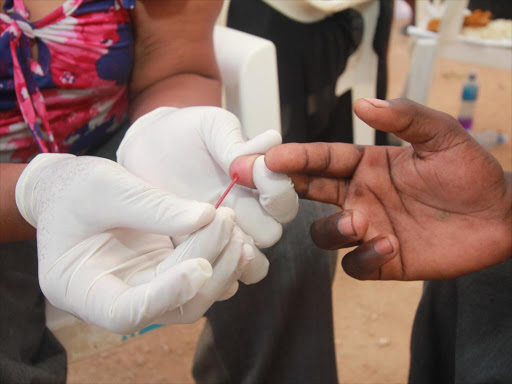
Nairobi, August 2024 – In the heart of Kibera, Nairobi’s sprawling informal settlement, Amina and her husband Gregory have lived a decade-long battle against HIV. As a serodiscordant couple, Amina is HIV-positive while Gregory is HIV-negative. Their one-room home, constructed from rusted corrugated iron sheets, offers little relief from the harsh realities of life in one of Africa’s largest slums. Yet, amidst the challenges, their commitment to each other and to managing Amina’s condition has remained unbroken.
Every morning, Amina wakes up to the same routine: a handful of pills, taken with the meager breakfast they can afford. The pills are a lifeline, but the regimen is relentless. Some days, she forgets. On other days, she struggles with side effects that make her question whether she can continue.
The constant reminder of her condition weighs heavily on both of them, not just physically but emotionally. The stigma surrounding HIV in their community only adds to the burden.
“Condoms are our lifeline, but they’re not always easy to get,” Gregory admits. “Sometimes I have to abstain out of fear of getting infected, and when I’m unsure if the condom worked, I rely on PrEP pills which they are beyond our budget. If I could take something just twice a year instead of every day, it would change everything.”
Amina often worries about the long-term effects of the medication. “There are days when I feel like the pills are too much. It’s hard to keep going every single day, knowing that missing even one dose could have serious consequences,” she says. Gregory nods in agreement, his tired eyes reflecting the toll that maintaining their relationship while managing her condition has taken on him. “We do it because we have to, but it’s not easy. There’s always the fear of what could happen if we slip up.”

For couples like Amina and Gregory, who have been struggling to maintain a balance between love and safety, the news emerging from the 25th International AIDS Conference held in July this year in Munich, Germany, offers a glimmer of hope.
The PURPOSE 1 trial of lenacapavir, a new HIV prevention drug administered through bi-annual injections, has shown remarkable results—100% efficacy in preventing HIV among participants, with no infections reported in over 2,000 participants.
The introduction of lenacapavir could mark a major breakthrough in HIV prevention, particularly in regions like East Africa, where the burden of the virus remains high. As highlighted in the latest UNAIDS report, “The Urgency of Now: AIDS at a Crossroads,” there is an evident need for innovative prevention methods.
The report notes that of the 39.9 million people estimated to be living with HIV, nearly a quarter are not receiving treatment. The total number of people using oral PrEP rose from 200,000 in 2017 to about 3.5 million in 2023, but this remains far short of the 2025 target of 21.1 million.
Speaking at the Munich conference, Winnie Byanyima, UNAIDS Executive Director, stressed the need for unity and action, saying, “the path that ends AIDS is well sign-posted, it is proven and it has been promised. Success or failure will be determined by which path leaders take today. Let us continue walking the path of solidarity, together and with urgency.”
The trial, which focused on adolescent girls and young women in South Africa and Uganda, offers a promising alternative to the daily pill regimen that has been the cornerstone of HIV prevention for decades.
In Kenya, where around 1.4 million people live with HIV and adherence to daily medication remains a challenge, the introduction of a twice-yearly injection could be revolutionary.

Byanyima emphasized the need for affordable access to long-acting medicines: “Gilead, you have a miracle tool in lenacapavir. This could transform access for gay men, for trans people, for sex workers, and for young women in Africa who fear the stigma of simply swallowing tablets. But right now, lenacapavir is priced for people in rich countries—this inequity never served us well in the HIV response.”
The strain of maintaining daily adherence to PrEPs and the associated stigma is not unique to Amina and Gregory. Across East Africa, many people living with HIV struggle with the same challenges, leading to gaps in treatment and increased vulnerability to the virus. A bi-annual injection like lenacapavir could help bridge these gaps, offering a more practical and sustainable solution for those who find it difficult to keep up with daily medication.
The trial also sets a new standard for future research by including adolescent girls and young women—a demographic that has historically been underserved in drug development due to concerns about pregnancy complications during trials.
The success of the PURPOSE 1 trial demonstrates the importance of including this group in research and ensuring that they have access to the latest innovations in HIV prevention.
In regions like Kibera, where poverty, stigma, and limited access to healthcare services exacerbate the difficulties of living with HIV, lenacapavir could provide a much-needed lifeline.
However, accessibility remains a key concern. With the current price of lenacapavir at $40,000 (roughly 5.1 million Kenyan shillings) per year for its use as a treatment, significant price reductions will be necessary to make the drug affordable for widespread preventive use in low- and middle-income countries, including Kenya.
On the importance of generic licensing for widespread access, Byanyima noted, “Some smart people have shown that generic manufacturers could make this miracle prevention tool not for over $40,000 as it’s priced in America, but for less than $100 per year in developing countries. Gilead, make this happen now. Don’t limit this miracle product to a few producers. The price will remain high, and millions will be excluded.”

Gilead Sciences, the pharmaceutical company behind the drug, has begun working on direct licenses for production in these regions, but the world is watching closely to see how quickly and affordably the drug can be made available.
Byanyima highlighted the urgency of making long-acting injections available globally: “Let lenacapavir reach the women I met in the favelas in Brazil, the gay men in Jamaica, and the civilians fleeing the war in Ukraine. Let it happen now! We have no time to wait.”
For now, Amina and Gregory continue their daily struggle with ARVs and PrEP pills, hoping that the future will bring them a better alternative. The possibility of a twice-yearly injection represents not just a new prevention option, but a chance for Gregory to protect him while reclaiming their lives from the constant demands of daily medication.
As the world awaits the wider rollout of lenacapavir, the hope is that this breakthrough will indeed bring a new dawn in the fight against HIV, offering relief and renewed optimism to millions across East Africa.
